
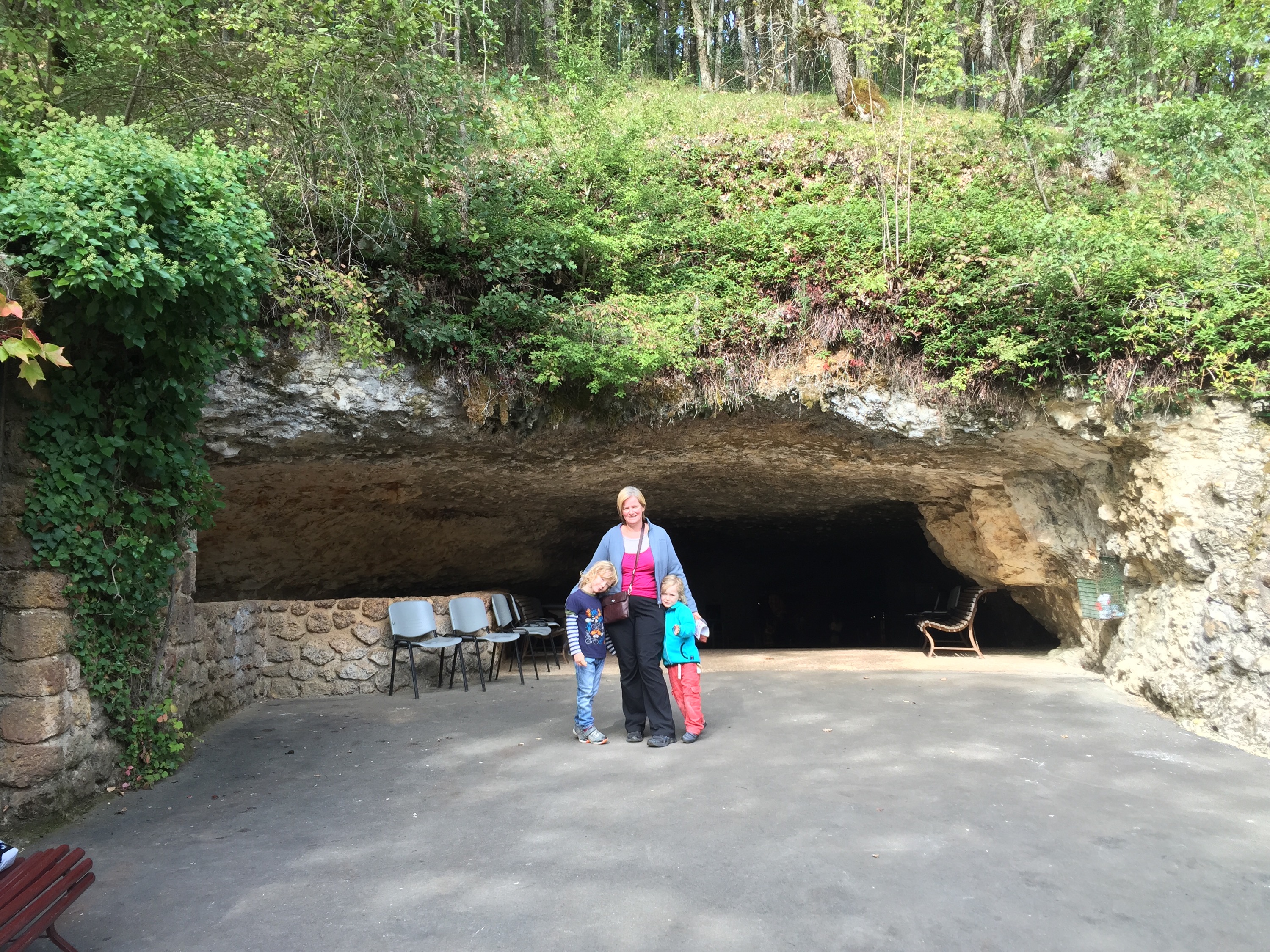
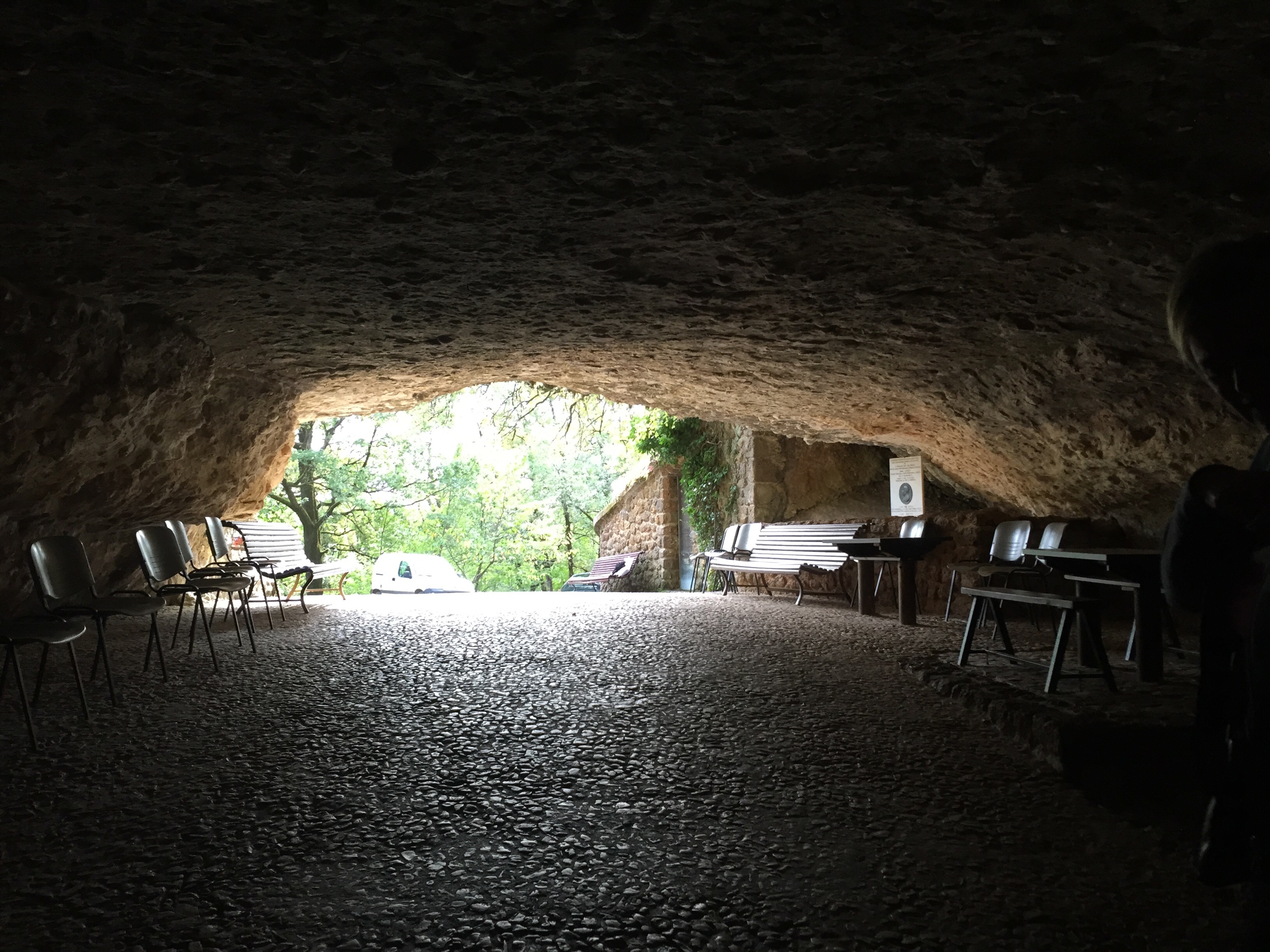
Hidden away in the Vézère Valley are a number of ancient caves featuring Paleolithic paintings, including the famous Lascaux Cave. After much research we decided to visit the Grotte de Rouffignac which was recommended as being the easiest to manage with small children. The paintings in this cave are over two kilometres underground so the owners of the site have installed an electric train to carry visitors directly to the artwork. We felt this would be a much better option than lugging the smallest WB (who weighs as much as 2 large sacks of potatoes) through dark rocky tunnels and meant the boys would also have fun riding on the train as a bonus.
The cave proved to be a fantastic experience and the boys handled it well (although little WB wasn’t so keen on being in the dark and had to be distracted with a lengthy description of what we would be having for our picnic lunch later).
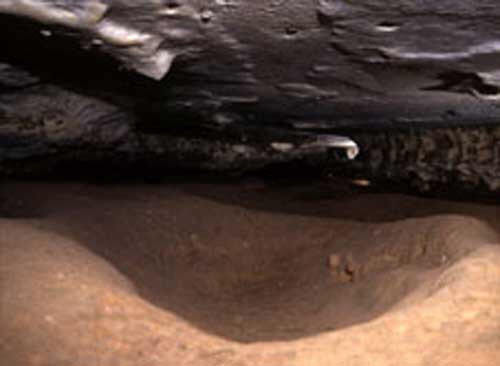
The tour was in French but we were able to decipher a lot between our rudimentary translations and with the help of the supplied English video guide. We travelled past multiple scratches and nests left behind by numerous cave bears who used to live in this cave – although our guide explained that the bears had moved on long before humans arrived (and had never returned, we assured the boys). And the paintings – or, more accurately, drawings – were awe-inspiring.
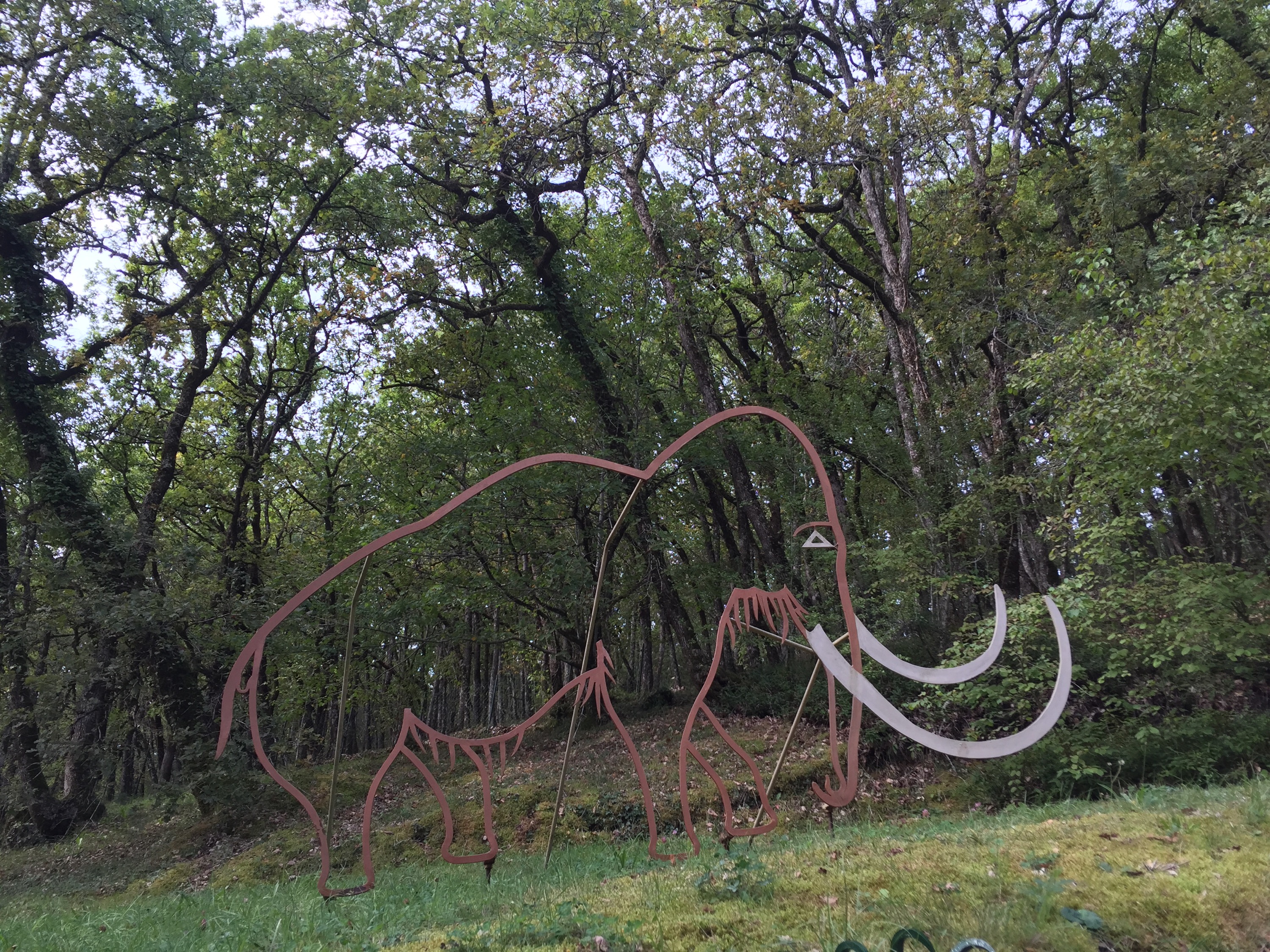
Rouffignac is also known as ‘the Cave of 100 Mammoths’ as it contains over 150 depictions of mammoths – a third of all representations across the entire collection of known Western European caves. In addition to mammoth we saw horses, bison, rhinoceros and many others. The artists were extremely skilled and used natural rock formations to add texture to the animals, making them almost three-dimensional. It was the chance of a lifetime to see them especially as the paintings are fragile and visitor numbers are carefully controlled as a result. Several caves in the area (eg Lascaux) have already closed to the public to preserve the paintings and protect them from further damage, so we were extremely lucky to see these fabulous traces of ancient human culture.




 Wild Berry Boys